
Walk into most large operations today, and you will not find a shortage of technology. You will find rooms full of it.
Cameras watch every entrance. Access control guards every door. ERP software runs the transactions. Supervisors carry tablets. GPS tracks the fleet. Sensors sit on the most important machines. Someone made a good case for each of these purchases. Most of those cases were right - on their own.
But the company still cannot say, with confidence, where its time is going.
That is not a technology shortage. It is a systems problem. And the two need very different fixes. A technology shortage gets solved by buying more. A systems problem gets solved by making what you already own work together - instead of staying a pile of separate purchases that happen to sit in the same building.
Here are the five mistakes we see most often. And here is what changes once a company fixes them.
Mistake one: automating a broken process
The instinct makes sense. A process is slow, so you try to speed it up with technology. But automating a badly designed process does not fix it. It just runs the same mistake faster, with more money behind it - and it gets much harder to change course once it is built.
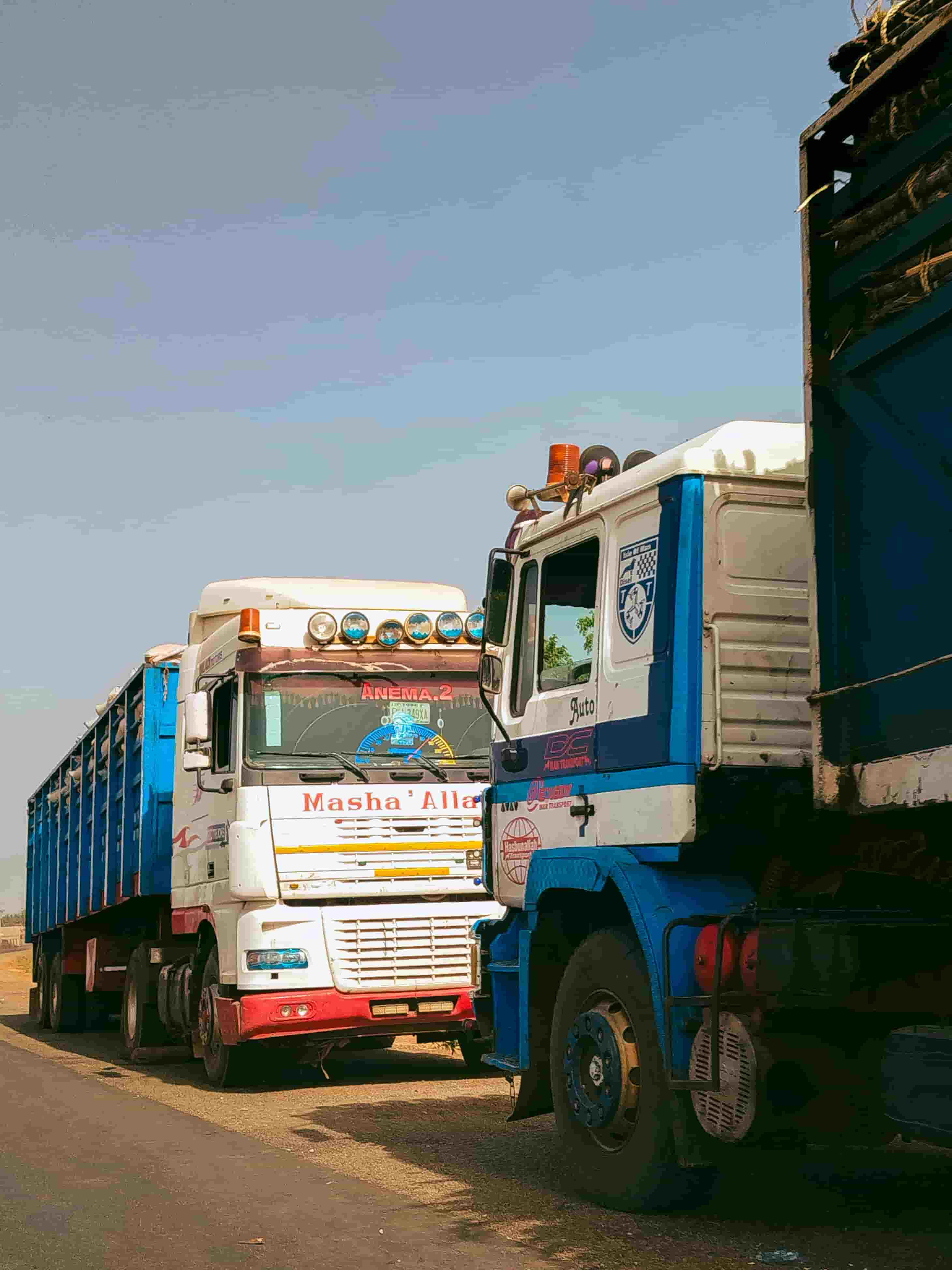
We have written before about what this looks like at a factory gate. A camera reads number plates and logs them perfectly. But the truck still waits in the same long queue as before. The camera works. The problem does not move.
The fix is not a faster version of the wrong process. It is understanding the process first - before you decide what to automate.
That means watching the operation as it really runs. Mapping every step, including the ones nobody thinks to mention. Finding the one point that is actually holding back the whole operation. Then automating that point - not whichever part happened to be easiest to wire up first.
Mistake two: treating visibility as the same thing as control
A dashboard is not a decision. A camera feed is not an action. An alert nobody responds to is just paperwork dressed up as insight.
Most companies we meet already have real visibility tools - cameras, GPS trackers, sensors, dashboards. And they genuinely believe this means they have control. The real test is simpler than that. When the system sees something, what happens next? Does it reach someone who can act, in time for the action to matter? Or does it get logged, stored, and reviewed a week later - long after the moment to fix it has passed?
Real visibility has three traits. It is captured at the source, straight from the process - not from someone's memory at the end of a shift. It shows up while the event is still happening, not the next morning. And it is specific enough to point at a real cause, not some broad category that explains nothing.
Visibility without a path to a decision is just an expensive way to find out what already happened.
This is where event detection, alerts, workflow tools, and audit trails come together into something a company can actually use - instead of a pile of separately impressive tools that never quite connect to the moment a decision needs to be made.
Mistake three: making people cover for disconnected systems
This is the most costly mistake on the list, and it is the easiest to miss, because from the outside the operation looks like it is working.
It is working - because a yard marshal remembers which truck is next, since the yard system does not track it. Because a WhatsApp group lets maintenance coordinate in real time, since the official ticketing system is too slow. Because someone keeps a private spreadsheet, since two departments' systems do not talk to each other, and somebody has to reconcile them by hand. Because someone keeps a notebook "just in case," full of settings and exceptions that live nowhere else.
None of this is laziness. It is a reasonable response to systems that do not do their job. People are remarkably good at quietly absorbing this kind of failure - which is exactly why it stays hidden from management for years.
People should run the system. They should not have to become the system.
The cost shows up in two places, eventually. It shows up when the person holding all that informal knowledge leaves - and takes an asset with them that was never written down anywhere. And it shows up in an audit, which ends up only as reliable as whoever happened to write things down.

Mistake four: buying technology before defining the problem
The wrong question is: "Which technology should we buy?" The right question is: "What problem are we solving, and what mix of technologies actually solves it?"
Those two questions lead to very different results. The first question invites a vendor to sell you their platform. The second one requires someone who understands your operation well enough to combine software, automation, infrastructure, and data from wherever it truly fits best. Not every problem gets solved by the same brand's product line. And a company that locks into one vendor's ecosystem before it defines the real problem usually ends up with a solution shaped by what that vendor sells - not by what the site actually needs.
You are not choosing a product. You are building an ecosystem around a need that existed before any vendor walked in the door.
This is the case for working across multiple brands and technologies, instead of defaulting to one platform's pitch. The problem should shape the design. The design should shape which technologies get combined. Flip that order, and you end up with expensive equipment that solves a problem close to yours - but not the one you actually had.
Mistake five: measuring activity instead of measuring results
Most companies can report how much happened. Far fewer can report where things broke down.
How many vehicles entered. How many patients were registered. How many pallets moved. How many trucks left the yard. These are activity counts. And a company can hit every one of these numbers while still losing huge amounts of time and capacity to problems the counts never show.
The real questions sit one level deeper. Where is time being lost? Where are queues forming, and at what point? Where is one resource sitting idle while another is overloaded? Where do the same problems keep happening, and where are new ones showing up? Where, exactly, does the process break down - and under what conditions?
Activity counts tell you the operation happened. Results tell you whether it happened well - and where it did not.
This is what real KPI design, event-based monitoring, and operational analytics are for. Not a dashboard of totals - a system built to keep answering the deeper questions, right when someone can still do something about the answer.
What "better" looks like
Fixing these five mistakes looks different in every industry, because the bottleneck sits in a different place each time. But the core discipline stays the same: understand the real operating environment first. Then build the connected system that actually fits it.
Manufacturing
The pattern here is uncontrolled vehicle movement, gate congestion, yard bottlenecks, and no real view of where material actually is. This is the exact problem our Bridge platform solves: connected entry, identity checks, queue and priority management, yard coordination, and dock scheduling - all as one system. Not a camera at the gate and a separate radio operation inside the fence.
Logistics
Fleet, yard, and movement data usually live in three different places, and none of them talk to each other. The fix is the same idea, applied at fleet scale: vehicle movement, site access, scheduling, and yard activity connected as one picture - built on the same engine that runs Bridge, instead of three separate tools each showing half the story.
Healthcare
The pattern is patient-flow congestion, caused by scattered information - admissions, bed status, discharge readiness, and department handoffs all tracked separately, with nobody holding the full picture of where a delay is actually happening. Connected workflow visibility, applied to patient movement the same way it is applied to vehicles in a yard, lets an operations team see exactly where the bottleneck is forming - instead of guessing ward by ward.
Agro-processing
Material movement, site access, and production-support logistics all sit inside a production process with its own rhythm and seasons. The answer is not a generic platform bolted onto the site. It is a connected system built around the real production environment - the same way every solution above was: starting from the actual bottleneck, not from a shelf.
The measure that actually matters
Technology should not be measured by how much equipment a company has installed. It should be measured by how much better the operation runs because those systems actually work together.
At TENNXT, we build connected operational systems around the real conditions of each site - combining software, automation, infrastructure, data, and technology from multiple brands to solve the problems that actually control output. Not just the ones that are easiest to sell a solution for.
The first step is not always installing another system. Sometimes, it is understanding the system you already have.
Not sure where your constraint is?
A Tennxt engineer walks one process with your team and delivers a written findings report. No cost. No sales presentation.
Further reading:
- The factory gate is not a security problem, it is an operations problem
- Your factory does not have a production problem - it has a visibility problem
- How to detect engineering bottlenecks before they become operational problems
- Five principles that shape how we engineer
- Why enterprise software projects fail before development begins
TENNXT is a Nigerian enterprise systems integrator working across engineering, industrial automation, software and IoT for manufacturing, logistics, healthcare and government. We find the constraint before we propose the system.


